Polymorphism investigations of drug substances: Why is it important?
Establishing if your newly discovered drug substance solid is polymorphic is a regulatory requirement as part of new drug approval submission. This is captured as part of the chemistry, manufacturing and controls (CMC) section of an NDA for a drug substance, together with a whole host of topics.
API solid state behaviour issues have had an impact upon drug product supply which is a concern to patients and, in the worse situation, can lead to harm. This reveals that the attributes of a drug substance directly influence the quality and performance of the drug products consequently produced.
The inadequacy in protecting the solid state behaviour of a drug substance by the innovator drug company allowed a competitor to identify a different version and demonstrate similar performance and efficacy as an alternate drug product. For the discovery organisation of the chemical entity this reduced potential revenue and subsequent knock-on effects.
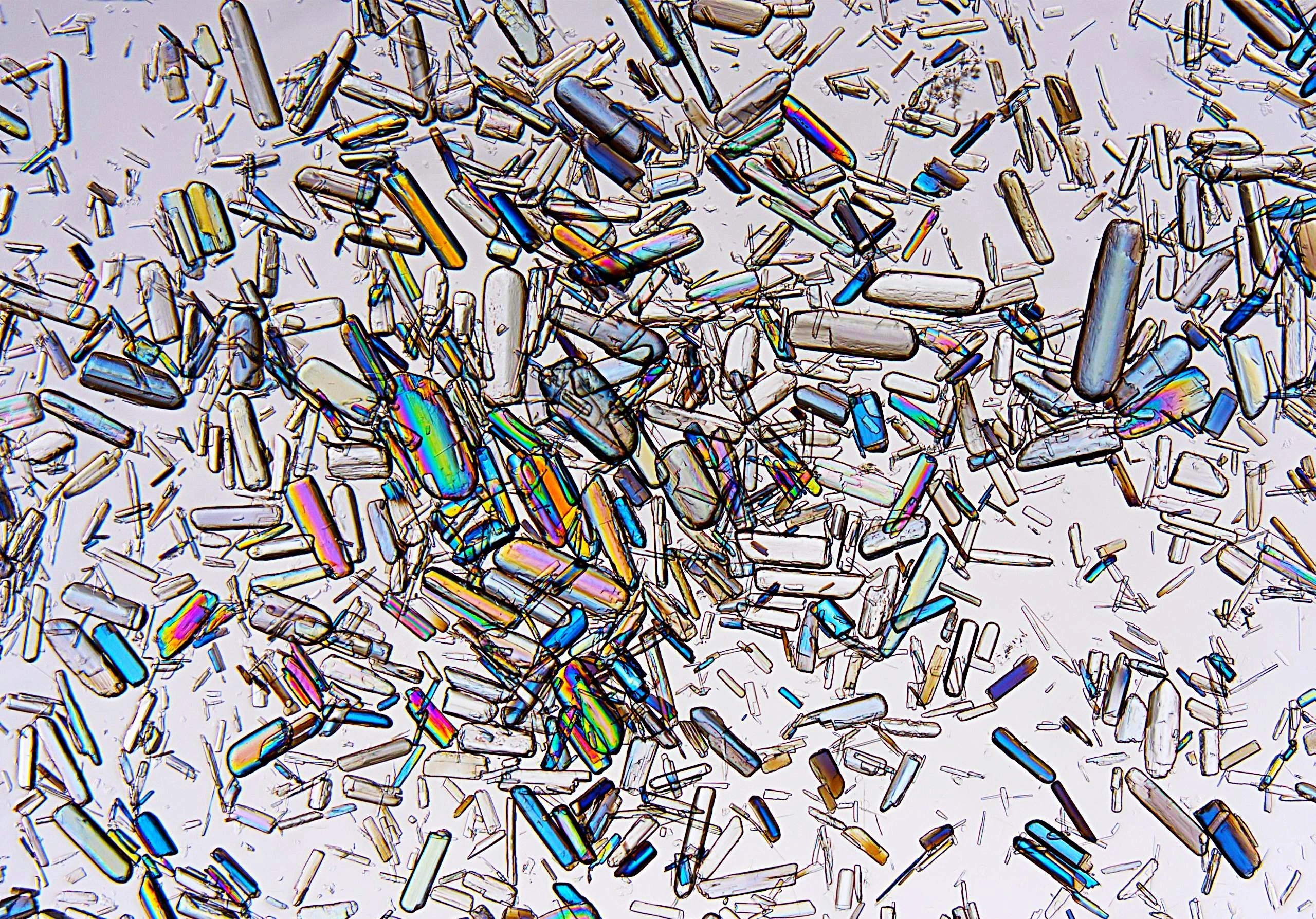
This highlights the necessity for organisations small and large discovering new therapeutic agents to further protect investment and potential future revenues in the API by capturing polymorphism, hydrate and solvate intellectual property. During crystallisation the freely moving molecules of a compound come together and start to arrange themselves into a network, crystal lattice. Differences in how the molecules pack together to generate the crystal is polymorphism. This can also lead to the formation of hydrates and solvates.
This is a fundamental attribute of the solid and can vary the physicochemical properties of a newly discovered entity. For instance, the form of an API in a drug product might lose efficacy as the drug substance converts to a form or version which is more stable and therefore less soluble or permeable.
This is where an understanding of the propensity of an API to polymorphism, hydrate or solvate formation should ideally be established during the early development phase. These investigations can establish the relationships between hydrate, solvate and form hierarchy. This enables the selection of the drug substance version with desired attributes for progression as a development/clinical lead based upon reliable data and findings including aspects of drug product formulation into consideration.
Investigations into this area of solid state science of your NCE or compound can be supported by MorphCryst Consulting, from providing proposals and managing programmes to data review and appropriate recommendations for future progress.